Hi everyone. My name is Jason Frazer and I’m here today to take you through my presentation ‘SUCCESS BI-DESIGN: How we embraced what we knew (in a field we didn't) to achieve success.”
Firstly, I’d like to conduct a quick survey. Could you raise your hands please if:
- you work in the games industry
- don’t work in the games industry
- have released a game
- haven’t released a game
And finally,
- What is your ultimate goal for working in the gaming industry? (This question will become more important later.)
Today I’d like to discuss the reasons for why we’re here, then take you through our journey to get to PGC Hong Kong and why any of this is important to you.
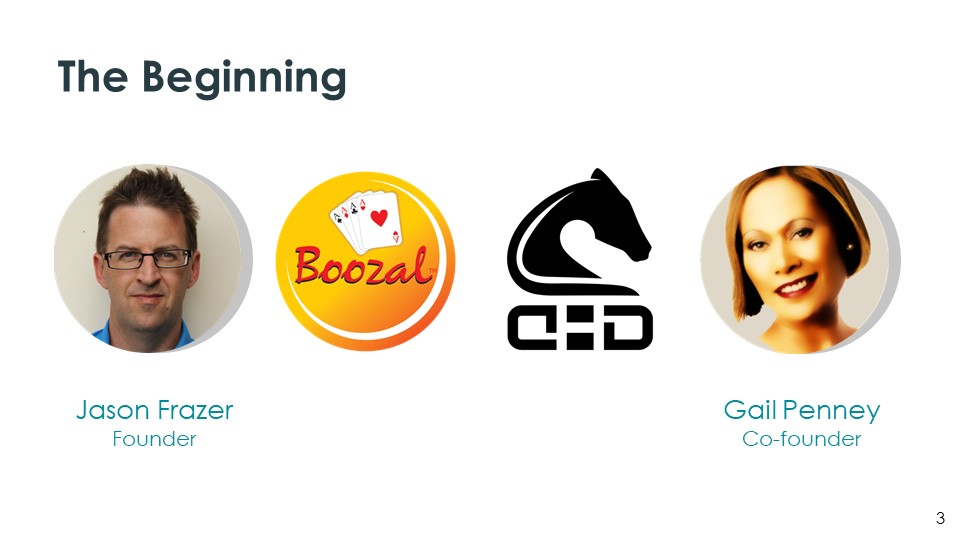
I’ve mentioned my name; I’m the founder of Dark Horse Digital, a two-person start-up company that makes games for mobile devices; Specifically one game currently, ‘BamBoozal’, our social card game.
I first started playing BAMBoozal (or Boozal back then) in 1996 with my mates as an excuse to get together at the end of a working or university week. It was an opportunity for us to be together and stay connected, and these gatherings would continue regularly for many years (and still do). In 2001 I wondered “If BAMBoozal is an opportunity for us to be together and stay connected, I wonder if it will be for others too?”. So, I pitched the idea to my friends to see if any of them were interested in building a business around the game. My friend Gail saw potential in it, so we started, and this was the early foundations of what BamBoozal would become.
So why are we here? I’d like to think we’re here at PGC Hong Kong because we have similar goals. We either want:
- to make and release a successful game or
- to build and grow a successful business.
I believe that there are benefits in seeing other people who arrive at the same goals in different and various ways and applying their lessons to our own outcomes.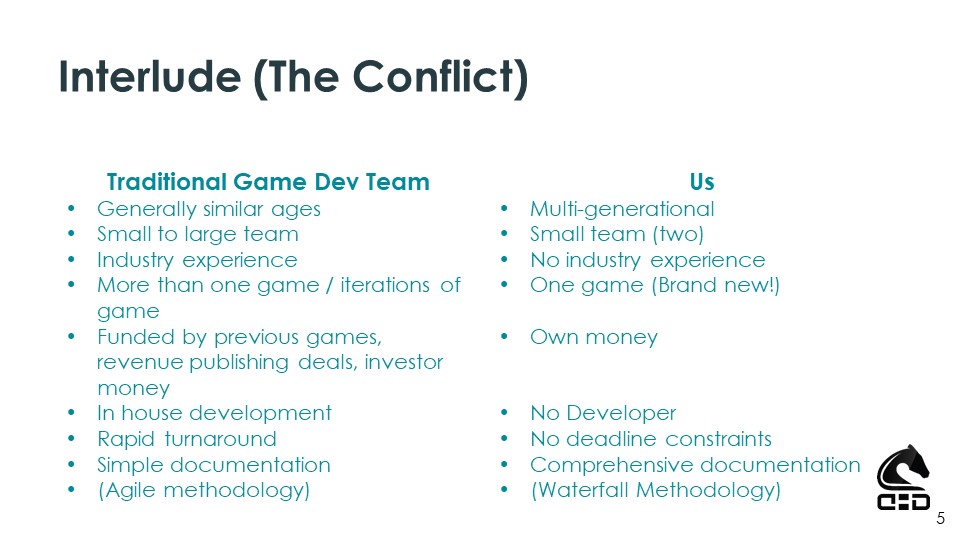
Once we decided to start a business, we examined what we considered the characteristics of the traditional Game Development team and how they compared to where we were at. Once we compared, we realised we couldn’t be further from the traditional game development team and that we were much closer to the traditional business start-up model. So, we started there.
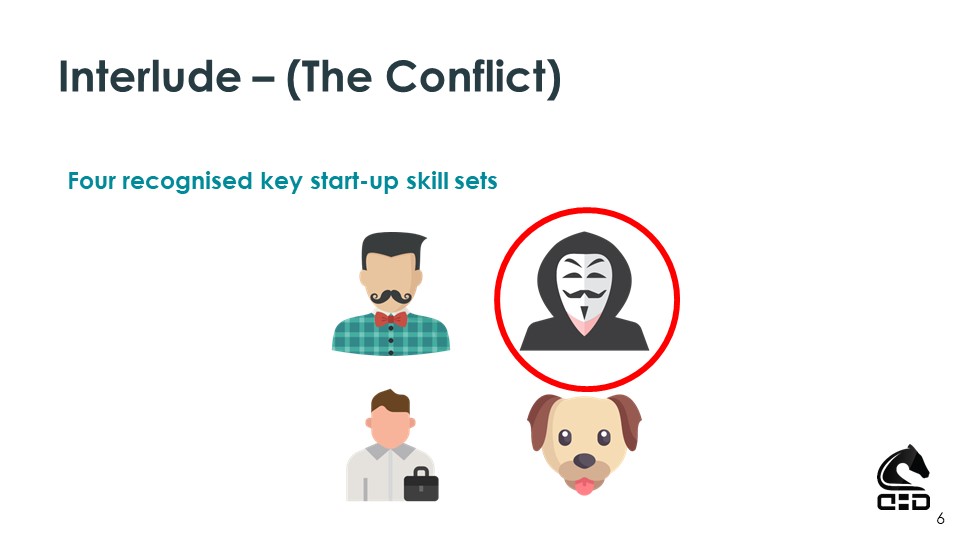
Within the business startup space, there is a methodology that says a successful business start-up should have four recognised key skill sets:
- The hipster (or the design and social media person)
- The hacker (the coder or developer)
- The hustler (the sales or lead generator) and
- The hound (or the researcher, who finds out about the market and the customers).
We realised we could make up three of the possible four skill sets, but there was one clear skill we weren’t able to do, and that was the hacker. So, we started our search for one.
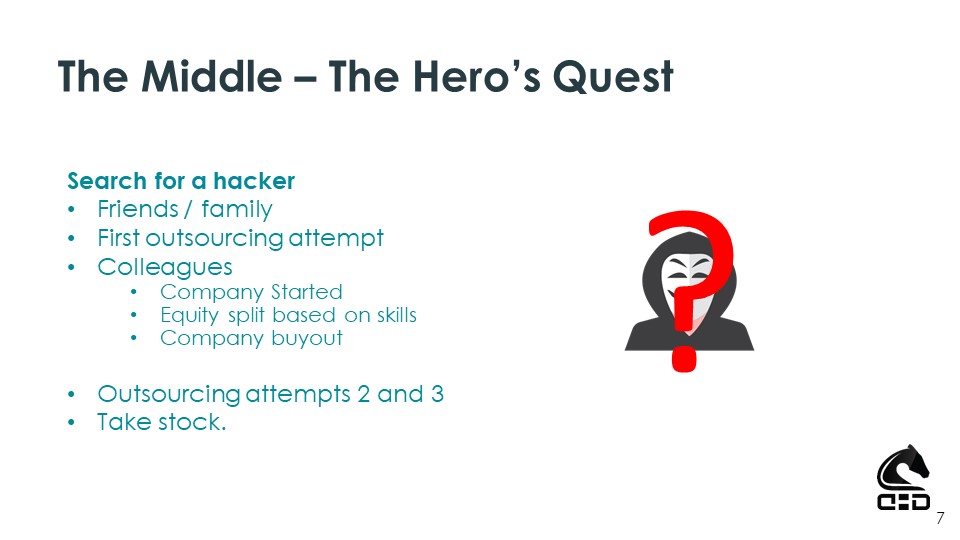
We started with our friends and family, to see if there was anyone who wanted to join us on our journey. When we couldn’t find anyone there, we decided to try and outsource the hacker skills. Back in 2010, app development (particularly in Australia) was in its infancy and expensive, and we didn’t know a lot about the industry, so we decided to look amongst our colleagues. We found some who were willing to join us, so we started a company and completed an equity split based on skill sets and other items brought to the company. This lasted about 18 months when we realised our colleagues and we were going in different directions. So we performed a company buyout leaving Gail and myself. Then we decided once again to try and outsource the development, and by this stage, we knew a little more about the industry. The second company we tried outsourcing to went bankrupt and the third company wouldn’t listen to us (and this wasn’t going to work long-term for us). We were back to square one and we took a moment to take stock of where we were at.
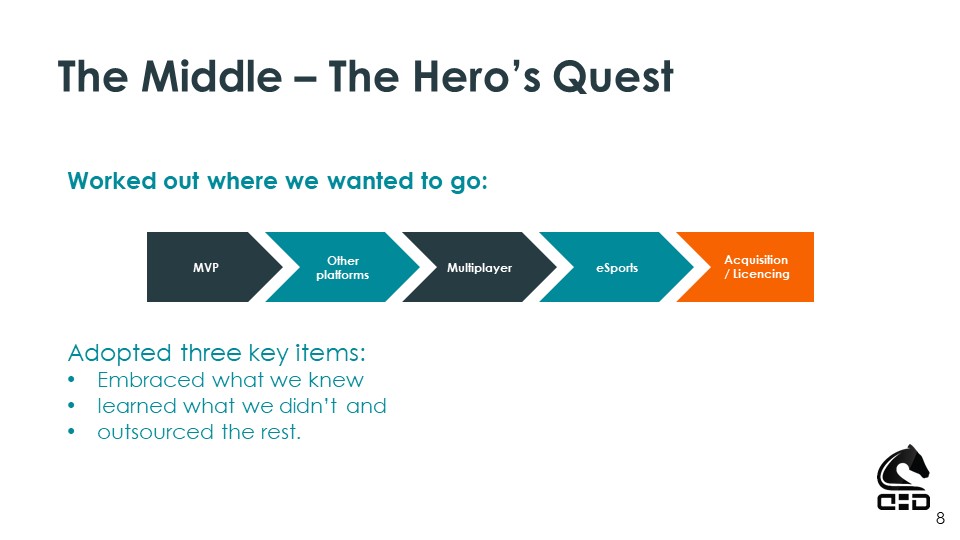
The first thing we did was to work out where we wanted to go (or what our ultimate goal was). We decided we either wanted to be acquired or have our products licensed. Once we knew what our goals were, we worked out how to get there. We also adopted three key ideals. We would:
- embrace what we knew
- learn what we didn’t and
- outsource the rest.
What did we know? Design. We both came from a design background. It was important for us to have a contemporary design; we had little money for marketing so we needed to stand out and get noticed. We focussed on three key elements:
- The playing cards (they needed to look familiar yet different)
- The icon / logo and
- The game itself.
We also needed to leverage:
- our IP (and own it) so we could ultilise every possible revenue opportunity we could, from physical playing cards to animation, shirts and other merchandising
- existing resources (such as content websites like 99Designs and Freelancer, where you could get hundreds of designs for a fraction of the cost. You could also leverage the tools on these sites like polling your social media followers and conduct A/B testing on the fly
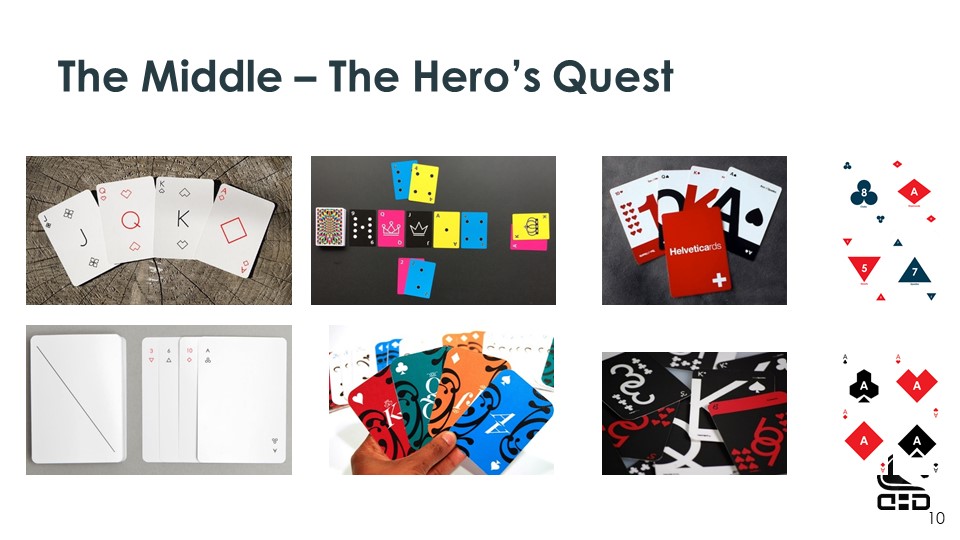
Here are some of the hundreds of existing card designs we looked at. They needed to look familiar, yet fresh. Our current design is in the bottom, right-hand corner of the slide.
11
Our logo or icon was quite critical to our success. In most cases, it was the first time our players would find us (either in the Google Play or App Stores), so it needed to tell the game story and be enticing enough to want someone to try our game. Our current logo is also in the bottom, right-hand corner of the slide.
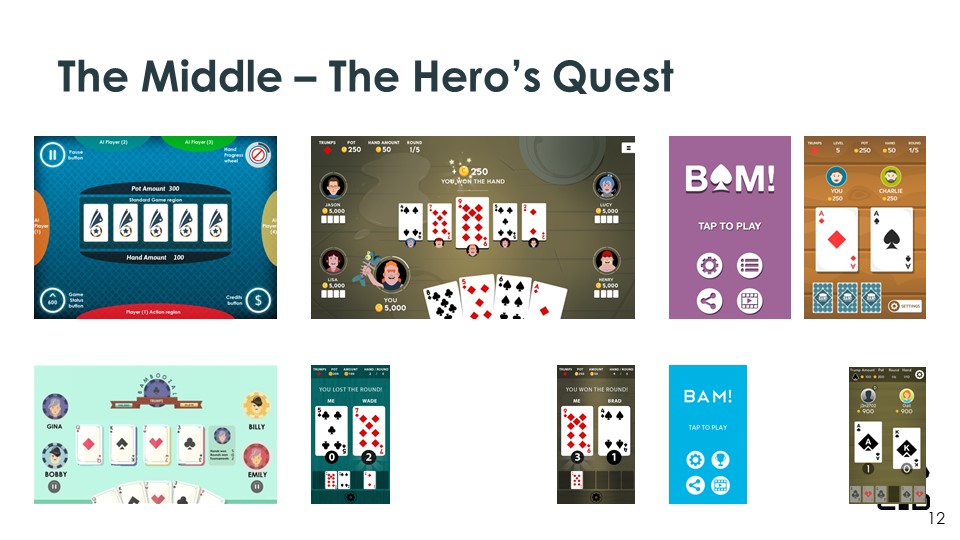
And finally, the game design itself. It needed to be easy to use, to play, to navigate around. We didn’t want to give our players any reason to not want to stay and play the game and it was important for us to have a clean ‘look and feel’. Our current design is also in the bottom, right-hand corner of the slide.
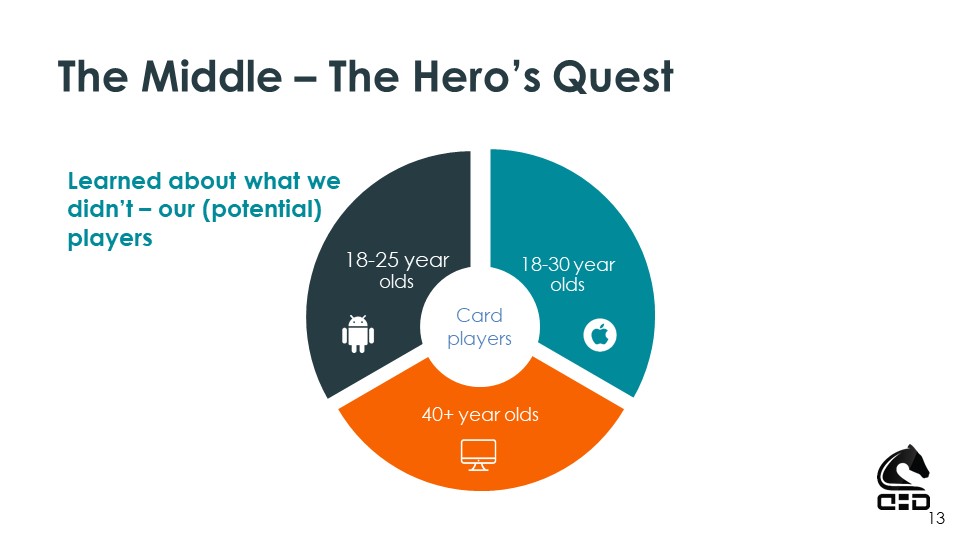
Next, we needed to learn about what we didn’t know – our players. We started with card players themselves, and we learned that mobile card players:
- Most likely to purchase an IAP
- Engaged for a significant period of time
- Enjoy evergreen content (or games they could play over and over and over again).
Next, we’d target 18-25-year-old Android Users, and we learned they:
- spend low but we highly engaged and
- like to tell their friends if they liked something (and this was important to us early on)
Then we learned about 18-30-year-old iOS users, who:
- weren’t as engaged but had a higher spend and
- who would also tell their friends if they liked something.
Finally, we’d target the 40+ online users, who:
- were mostly women, play in bursts and online (desktops / laptops) and
- would play for up to three hours in a single session.
They were another direction that we would want to target to achieve our goals.
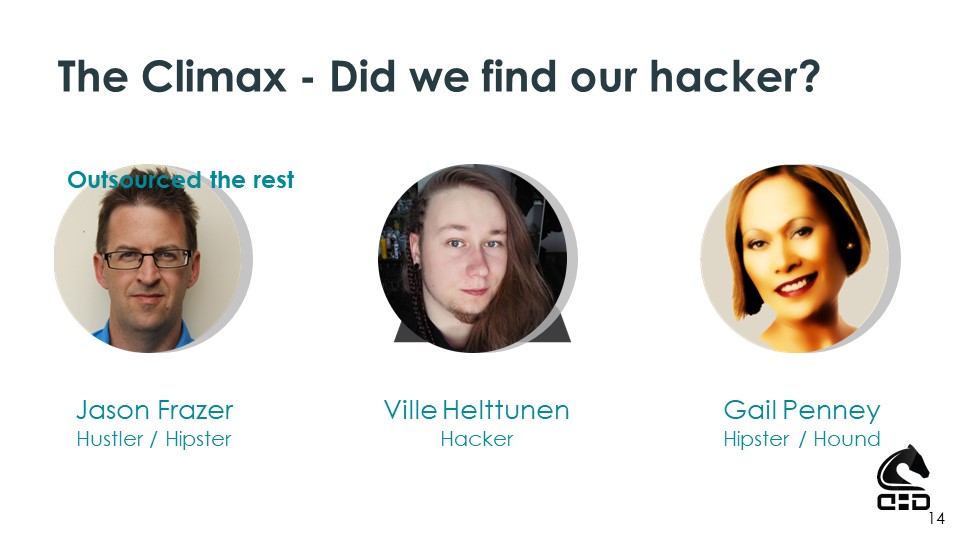
BUT, we were still without a hacker! So we did other things. We:
- approached local investors
- applied for grants
- attended networking events (met new friends and colleagues)
It was at a networking event that I met Patty Toledo, who introduced us to Kaamos Games.
Kaamos was easy to work with, had made games before, and wanted to work with us because we knew what we wanted, had a unique game and clear documentation.
We had finally found our hacker!
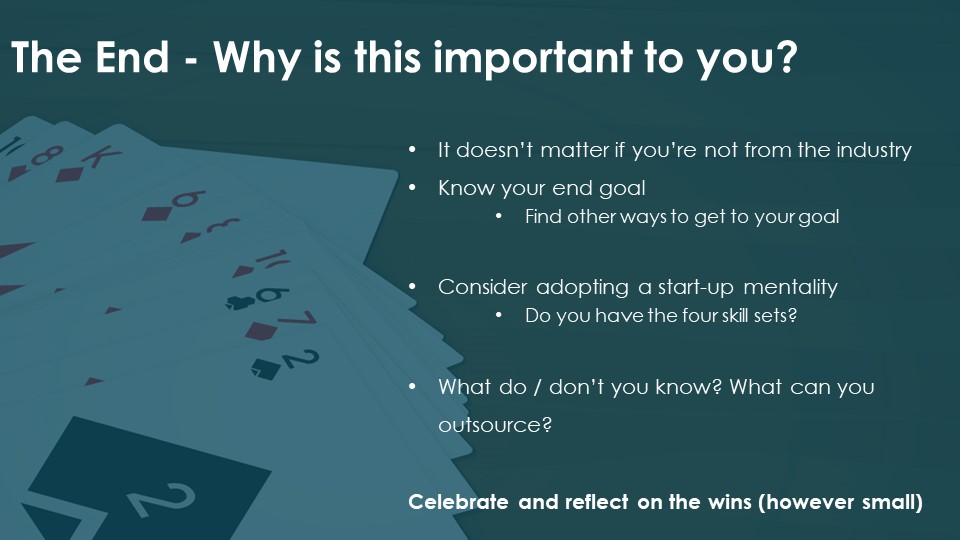
So why is any of these important to you?
- We are proof that It doesn’t matter if you’re not from the industry, you can still make it work
- It’s important to know your end goal and work out ways to get there
- Consider adopting a start-up mentality, working with what you have and working out ways to get what you don’t.
- Do you have the four skill sets?
- What do / don’t you know? What can you outsource?
And finally, Celebrate and reflect on the wins (however small). It’s hard building anything and it’s important to celebrate all the wins your achieve (whatever they may be).
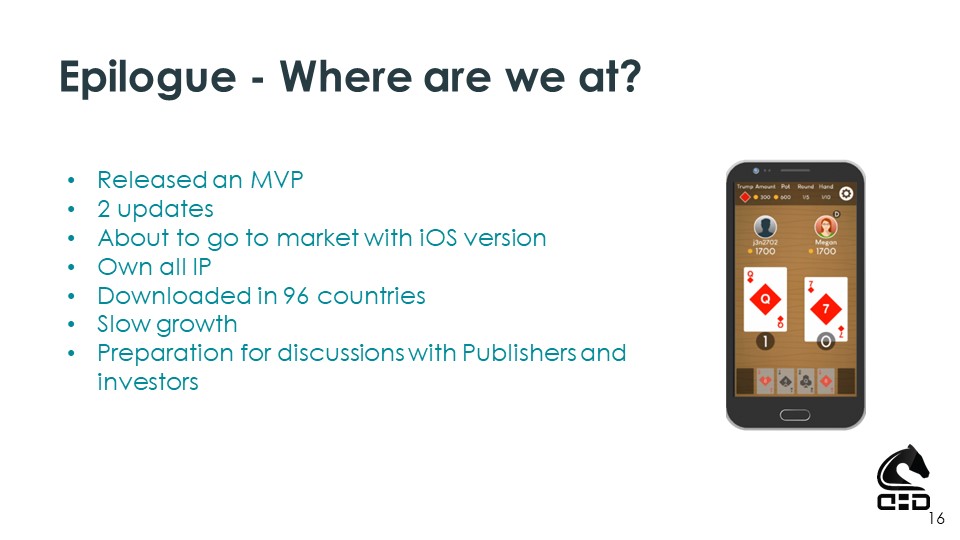
Where are we at? How close to our goals have we gotten?
- Released an MVP
- 2 updates
- About to go to market with iOS version
- Own all IP
- Downloaded in 96 countries
- Slow growth
- Prepared to continue discussions with Publishers and investors.
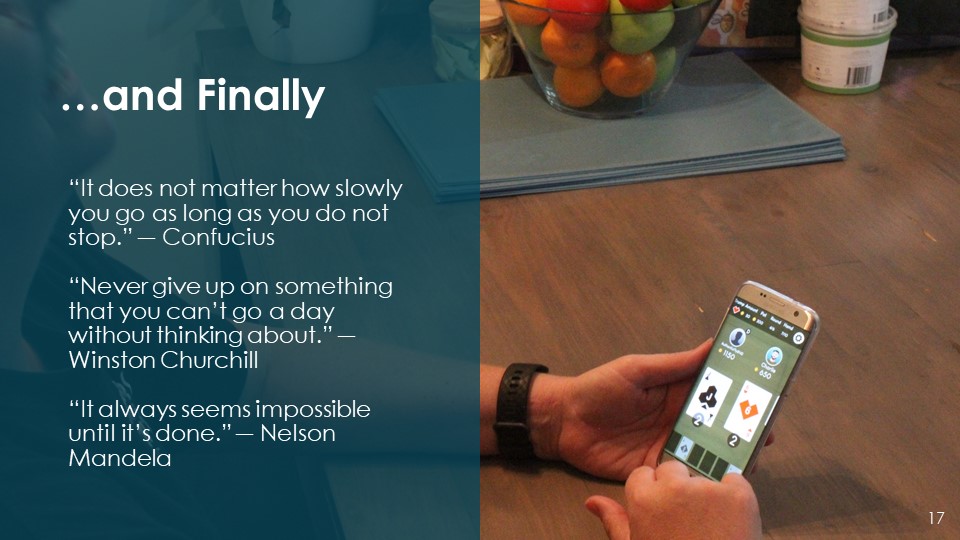
BONUS CONTENT
The following checklist contains a list of questions you can ask yourself about where you’re at and where you want to be.
Good luck! I wish you the best on your journey.
General
- Do you have clear goals and a path for getting there?
- Does everything you do move you towards achieving your goals?
- Are you thinking big enough?
- Is releasing a game the beginning or the end?
- If it's the beginning, can you scale quickly?
- Have you embraced what you know?
- How are you different from everyone else?
- What do you do well?
- What do your networks look like?
- What keeps you going?
Design
- Does the design help you achieve your goals?
- Does your design scale?
- Does your design work on larger in multiple media?
- Does your design contribute to the ease of play?
Business
- Do you have the four start-up team skillsets?
- What skills are you missing?
- Can you skill swap?
- If you have business partners, do they complement and challenge you?
- How can you be leaner (e.g. Time and money)?
- What can you outsource?
- What tools and advantages do you have that no one else has?
- Do you own your IP?
- Do you have processes in place to partner with a publisher / investor?